
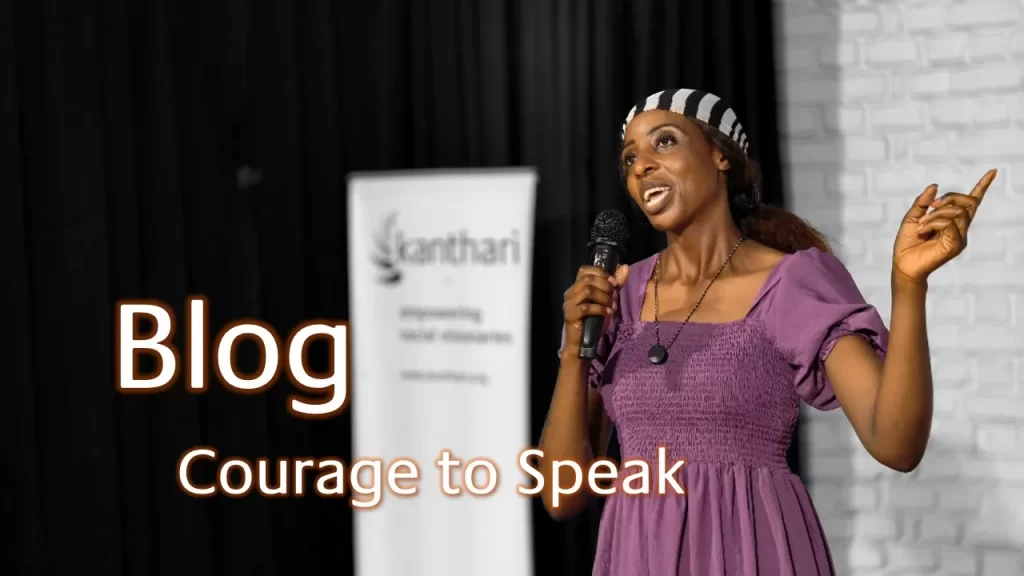
The auditorium is completely silent. Only the soft hum of the spotlights and the never-ending complaints of the crows outside break the stillness. Then the music begins.
At first, barely audible. Slowly, the powerful crescendo of an organ fills the hall: Also sprach Zarathustra. Since 2009, every kanthari participant had to endure this musical piece before giving their first Dream Speech.
For those who are new to kanthari, participants deliver three Dream Speeches during the course. The first one is presented shortly after arrival, the second after Act Two, when their concepts have taken shape, and the third and final speech is delivered during the kanthari TALKS in December.
While the kanthari TALKS are presented to a global audience and live-streamed around the world, the first speech happens right here on campus. Yet there is a catch.
Participants never know whether they will be first, second, third, or last. They simply have to be ready.
The music, composed by Richard Strauss and made famous worldwide through Stanley Kubrick’s film 2001: A Space Odyssey, has become part of a kanthari ritual. Seventeen generations of participants have heard it, and many alumni still report an immediate surge of adrenaline whenever those first notes begin to play.
Did you know that public speaking is consistently ranked among humanity’s greatest fears? In many studies, it scores alongside the fear of serious illness or losing loved ones.
But why? Are people really afraid of speaking itself? Of forgetting their words? Of going blank? Or are we afraid of something much deeper?
Perhaps we fear being judged. Embarrassing ourselves. Being rejected by our community because we express something that others may not agree with.
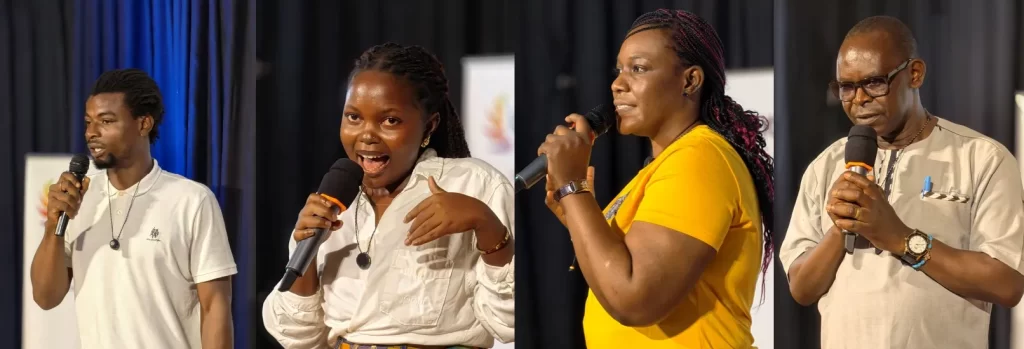
Against this backdrop, it becomes easier to understand what we ask of our newly arrived participants. After just one week on campus, they are expected to stand on a stage in front of an audience they barely know. A video camera records every word. A group of catalysts sits in front of them, typing observations into their laptops while participants essentially turn themselves inside out. And that brings us to the topic of this first speech.
The assignment is simple, at least on paper:
Speak for ten minutes about the problem you want to solve, your personal story, and the solution you envision.
Phew! That is a lot to ask. None of these topics are easy.
I have written before about how difficult it is to define a problem clearly. Describing a solution that has not yet been fully developed is a challenge in itself. But speaking about one’s own life? About painful memories, turning points, disappointments, fears, and experiences that may have been carefully locked away for years? And then sharing all of this with people you hardly know? Isn’t that asking too much at such an early stage?
Looking at the speeches presented this week, I have to say: no.
We asked a lot, but we asked it from exactly the right people.
One after another stepped onto the stage. Some were more nervous than others, some more structured, and some better prepared.
But every single one of them accomplished one of the most courageous acts a person can undertake: speaking publicly while remaining true to themselves.
They spoke freely from their hearts. They entrusted us with their deepest vulnerabilities, their physical and psychological wounds, without drifting into self-pity. They stood there calm, factual, confident, and powerful. Many shared their personal stories for the very first time. Stories of neglect, homelessness, exclusion, discrimination, violence, and persecution. And yet, within every story there was something remarkable: Hope.
There was always a way forward. A refusal to see themselves as victims. A determination to transform hardship into a broader goal.
Among this year’s participants are survivors of rape, violence, loneliness, societal pressure, poverty, war, discrimination, and the devastating effects of climate change. Yet none of them chose to remain defined by what happened to them. Instead, they drew strength from their struggles and transformed painful experiences into ideas for change.
Watching them speak so openly during their very first Dream Speech, I am reminded of my own first public appearances, speeches, readings, and television interviews during the early days of our Braille Without Borders time in Tibet. I still remember how painful it was to speak about difficult moments: the discrimination from classmates after I lost my sight, the challenges of building our school for the blind, or not being taken seriously by German officials.
These were challenging experiences that had to be told because they shaped who we are today.
But only with time and practice was I able to detach myself from reliving the pain while speaking. It took hundreds of speeches before I could talk about these experiences without being overwhelmed by feelings of anger, hurt, or embarrassment, while still telling the story in a way that made it feel as immediate as if it had happened only yesterday.
Their speeches gave a promising first impression, and I am already looking forward to the kanthari TALKS in December. (11 & 12 Dec 2026)
learn more about kanthari TALKS on https://kantharitalks.org/
Read more blog posts here
This is such a nice description of the actual feeling inside the hall as I prepare to go on stage, and as I listen others tell their stories.
I can recollect a few, isolated instances where we all went wild with laughter though😄