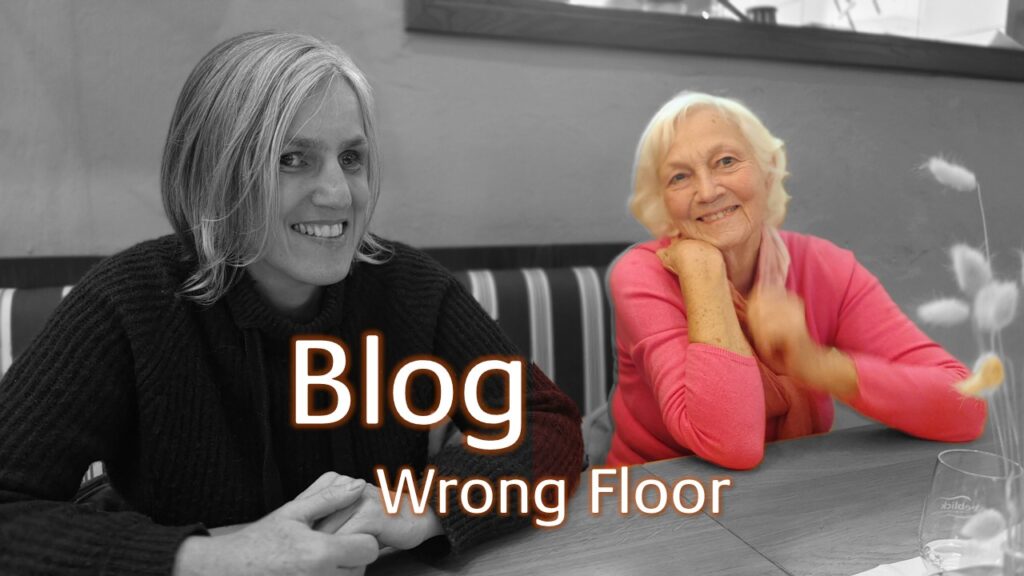
This week, I received a long email from my mother, who travelled through three countries, just to catch a glimpse of a famous painting by Titian. My mother is 87 years old and, of course, the painting was not the only goal of this adventure. It was also proof, for herself and for everyone around her, that she is still very capable of living.
And I can assure you: she is.
She is remarkably skilled at turning one tough situation after another into a feeling of having won the lottery. While many people, even those who are much younger, would have given up at the first or second obstacle, or never dared to begin such a journey at all, she seemed to find genuine joy in every challenge that came her way.
Reading her story reminded me of our Talking Circle, in which everything that could go wrong is transformed into a high jump.
Here is just one example of my mother’s journey.
It was already late at night when she wanted to enter her hotel room, but the key that had worked perfectly an hour earlier no longer worked. No one was around. No guests, no hosts. It was one of those hotels that are remotely managed from somebody’s home.
Instead of worrying about her safety, becoming angry that the lovely room with its comfortable bed remained unreachable behind a locked door, or panicking about where she would spend the night, she looked around, and concluded that the staircase was nearly perfect for sleeping. After all, it had a decent carpeted floor.
What more could one ask for?
Well, as I already mentioned, my mother has always been exceptionally good at turning setbacks into something beautiful.
And this is exactly a quality that social change-makers also need to master.
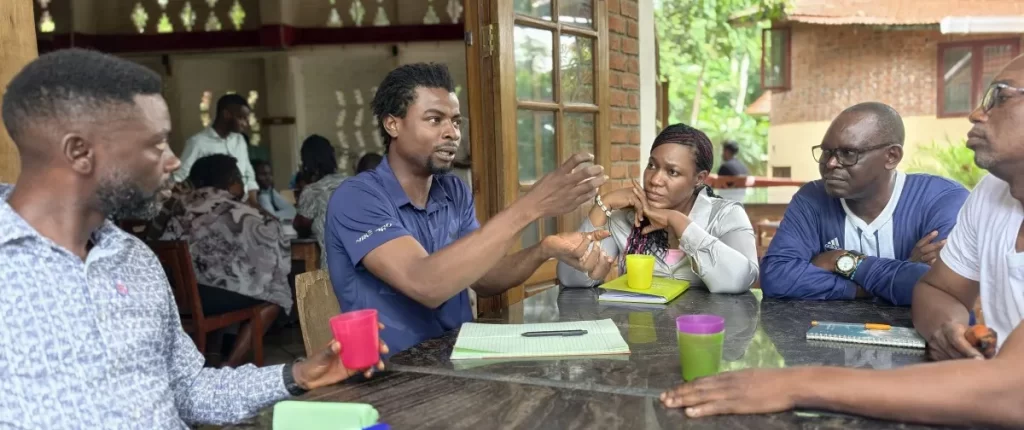
We practice this transformation in our problem definition workshop using a tool named the Talking Circle.
Each participant draws a chit with an emotion written on it: jealousy, sadness, loneliness, anger, helplessness, or exclusion. They then tell a personal story in which this emotion played a major role.
Others ask questions, and at times, while responding to these deeply personal reflections, participants begin to realize that experiences which once troubled them can, in hindsight, be understood as valuable.
Jealousy often turns into: “Well, it opened my eyes to this crook and gave me the freedom to tell myself to get the hell out of this prison-like relationship!”
Loneliness transforms into: “I discovered that I didn’t need others to give me self-worth. I already had a strong personality to rely on.”
And exclusion becomes: “How wonderful that I found out who my true friends are, and who I should avoid in the future.”
What we should not do, however, is downplay the problem itself. That would not do it justice.
There is nothing good we can extract from war, poverty, violence against marginalized people, environmental destruction, or the loss of beloved friends or family members.
The Talking Circle is not about glorifying or ignoring suffering. It is about dealing with emotions.
The emotion is there and, in most cases, it is entirely justified. After all, it is our personal experience and our genuine feeling. But emotions can trigger different kinds of reactions and actions. We can despair. We could get stuck, or we can reflect, learn, and eventually overcome it.
The past week brought several emotional ups and downs.
In memory of David Olendo, our 2025 participant who passed away on 18 June last year, we all stood silently while our Kenyan participants planted a coconut tree in his honour. It was a wish expressed by his daughter, who remains in touch with Mary and Paul.
As we watched, we listened to the birds and to Faith’s Swahili song about strength and overcoming pain. It reminded me of last year, when we sat together on the roof terrace, sharing the pain of losing a very kind and deeply respected participant, and promising each other that we would integrate a piece of David’s dream, protecting nature, into all our individual projects.
And, as if fate likes to bundle all sorrows together, we were shaken by news from the family of one of this year’s participants, who had lost beloved family members due to a fatal medical decision. For the sister and for her twins, we planted three mango trees next to David’s coconut palm. And perhaps, a few years from now, all those who wish to remember them can sit in the cool shade of these trees and reflect on life, both before and after the loss.
As sad as we all were, we also felt unity, solidarity, and care.
Closing this piece on a lighter note, and returning to my mother’s adventure, you may be wondering whether she actually spent the night in an empty staircase.
No, she didn’t.
She made one final attempt to find someone who couldn’t speak her language, but who could help her solve the riddle of the key that didn’t fit. Together, they discovered that she was simply on the wrong floor.
After going up one more staircase, the key magically unlocked the door and opened the entrance to a now even more welcoming room with large windows overlooking all the sites she could visit after a good night’s sleep.
Sometimes, perhaps, we are not locked out at all.
Sometimes, we simply stand on the wrong floor.
Read more blog posts here
learn more about kanthari TALKS on https://kantharitalks.org/