
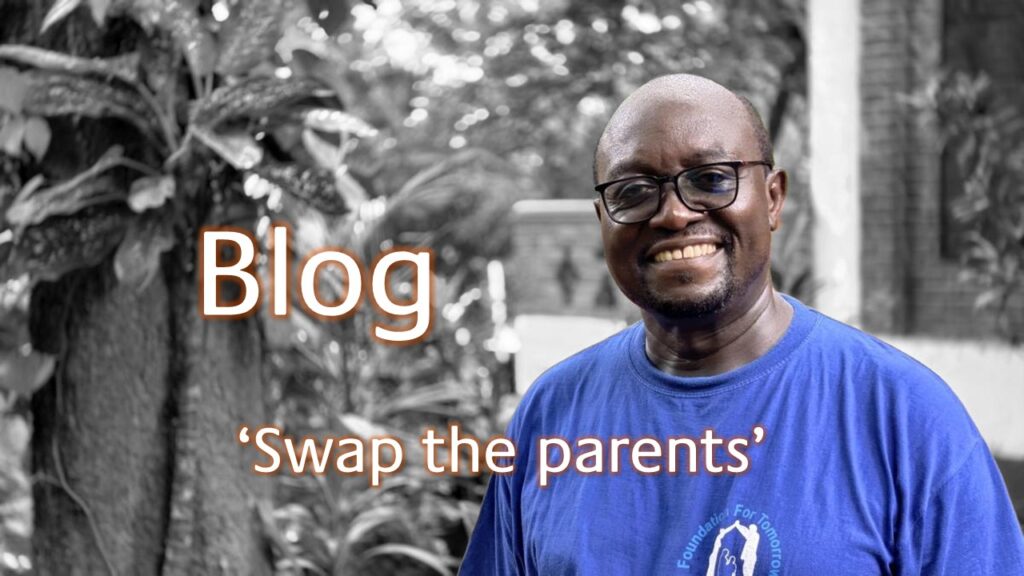
This week we start with Act 2. And for all who don’t know what Act 2 is all about, we are working intensely on the participants’ venture profiles: 1 catalyst with 4 to 5 participants. One of my mentees is George from Kenya, a father of a son with cerebral palsy. In his first dream speech, he spoke about his life as a single father. His wife left him and his son, and he had to take care of his boy alone. Out of this existential need, he started a community-based rehabilitation organization.
At the ‘Able’ (part of Edfest, organized by Scoonews) conference we attended over the last few days in Jaipur, we met several parents who were in a similar situation.
As I am writing this, we are sitting in an airplane somewhere between Jaipur and Chennai, eager to get home and get started with Act 2. We are flying through a monsoon-active corridor, and the airplane is shaking as if it were riding a bumpy road… The short time-out was good for both of us.
Stepping away from campus life from time to time helps us recharge and stay energized. The conference we attended was organized by Ravi Santlani, the founder of ScooNews, whose genuine passion for inclusive learning for all was evident in every detail!
The event showcased educational enterprises, publishing houses, and creators of hands-on learning tools. It made me realize just how vast the education industry has become.
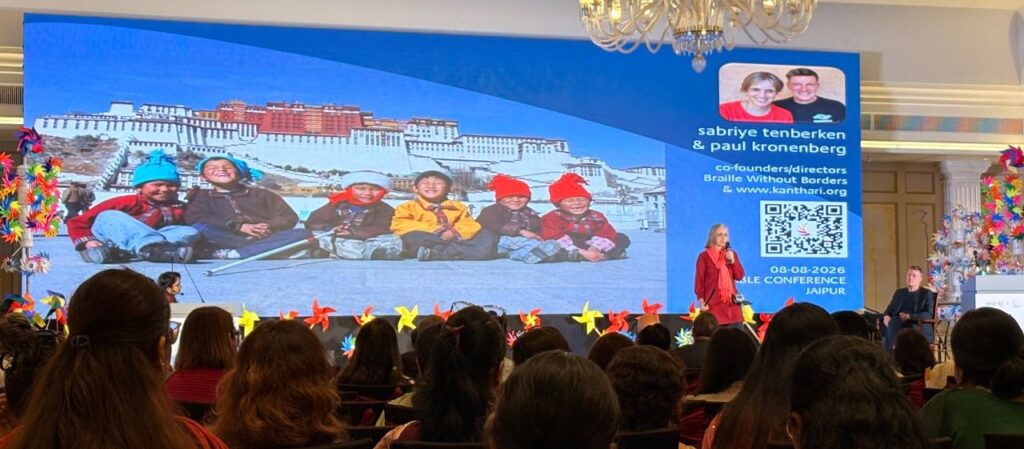
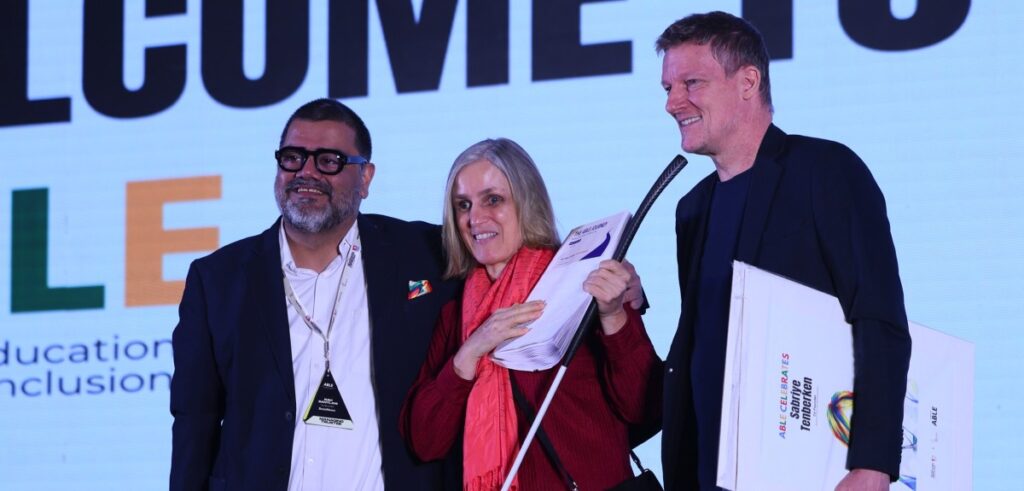
paul and I were invited as speakers, along with about 30 other changemakers, all working in the field of inclusive education. I was impressed by the genuine interest of the visitors, principals and headteachers. Many of them run private schools or colleges and were eager to open their schools to people with disabilities. Many did not see this simply as a service, but as an opportunity for both students with and without disabilities. Despite the enthusiasm of parents, teachers, and current and former students who had experienced inclusive education, I made some observations.
Every time a person with a disability spoke, it felt as if they had an urge to tell everyone how much they had achieved in life. They were all toppers in school, had passed their examinations with flying colors, met celebrities or even the prime minister, and/or received multiple awards.
Of course, it was refreshing, for a change, to meet people who didn’t focus on how much they had suffered because of being blind or physically disabled, but instead on what they wanted to achieve. But it also made me sad to hear that they all seemed to feel this pressing need to tell the world how “normal” they are.
One bright blind boy, 15 years old, spoke. He had a wonderful, mischievous character, and he spoke well about his dream. He wanted to become an IAS officer and make a difference in his community. I just hope it was his dream, and not a dream that was whispered in his ears by his parents.
He spoke about attending a school for the blind before experiencing an inclusive setting. In the school for the blind, he scored between 70 and 80 percent, which, he said quite clearly, was enough. But his parents told him that he should not compete with those other blind kids; he should compete with sighted students. The audience cheered.
But did they hear what the boy had said? The parents had apparently decided that “those other blind kids” were beneath their son intellectually. They were a ‘lower class’. And the audience cheered?
He attended a regular school for only a year or two before his parents withdrew him and encouraged him to pursue online learning instead, a format he apparently enjoys.
His mother sat in the front row, filming everything. She was clearly proud, like many of the mothers and fathers in the audience. Still, I found the relationships between the parents and their children a bit claustrophobic: some parents seemed to derive a great deal of meaning from their role as caregivers. And this brings me back to George and his project.
George wanted to empower the parents of children with disabilities by training them to become better caregivers. But I asked him whether he also trains the parents to give their children a little freedom or space. Parents and their disabled children, this was more than obvious at the conference, often seem to have a very strong interdependence. Therefore, I suggested to George that he additionally think about a one-day-a-week “Swap the Parents” programme.
The idea is simple: parents swap their disabled children for one full day. They spend this time with another family and learn from a different disabled child, while their own child experiences life with another parent.
The idea is not to treat children like parcels being exchanged, of course. It is about breaking the bubble of dependency and giving both parents and children a little breathing space. It can also give the child the feeling that the world is bigger than their own family, and that other families may have different expectations, different ways of handling challenges, different strengths and solutions.
George was excited and started talking to his beneficiaries about it almost immediately.
They tried it out last weekend, and the results were quite promising.
I would have loved to talk about George’s experiences and this new approach with the parents of children with disabilities at the conference.
However, due to the full schedule, there was not sufficient time to go in depth.
Maybe this could be an opportunity for future conferences, having less speakers and more time for personal interaction and exchange.
Real inclusion isn’t about applause or awards; it’s about everyday courage to loosen dependency, give children (disabled or not) some space, and create real freedom for children and parents alike.
It was great to attend the conference; there is always a lot to learn, and it provided plenty of food for thought. We are looking forward to being back on campus to get started on a fruitful Act 2!
More information about George’s organisation Foundation for Tomorrow (F4T) www.foundationfortomorrow.co.ke
Quite an inspiring test.
Growing up, we loved every opportunity to get out of our home and spend time with kids from the neighbours home.
I would think the same applies to the children with cerebral palsy – most likely they would love experiencing a new environment (and people) from those they are used to. Even if for a few hours a day.