This blog post is written by Mary Mutua from Kenya.
She is a 2023 kanthari graduate and the founder of twajali. An NGO that seeks to address the problem of marginalized youth in slums and semi-urban areas in Kenya being highly susceptible to crime, drug abuse, and prostitution while searching for livelihood opportunities. Using hospitality management as a tool, Twajali’s mission is to enhance the skills and capabilities of youth through holistic training and experiential learning methods.
Here is a weekly review that she had shared… Enjoy the read..
“For the last two weeks, I could not write my weekly reviews. For some reason, I was behind on my plan. Many unplanned fundraising activities cropped up, and I had to somehow fit them into an already packed plan. The fundraising experience needs a chapter of its own, that’s a story for another day.
For this review, I will not talk about the unsolved puzzles with Batch 12 or the dilemmas I still have to handle. Instead, I want to focus on Batch 11, the ones currently at the centre and who will be exiting by the end of this month.
Let me take you back a little.
Back then, as a participant at kanthari, during the curriculum workshop when our six-month model was being born, it was very interesting. But honestly, I had no idea how this was going to work. To me, it seemed like a movie script where I was yet to find the characters for the different scenes.
One of the gifts that a participant gets from kanthari is a backpack full of tools. So, they say.
Literally, one would think it is a collection of books with formulas, directions and manuals. In my case, I had nothing physical to show for it, except for, by now, short hair, but deep down, I was burning with knowledge.
I loved kanthari’s curriculum. How could I make Twajali’s 6-Course Menu like that, or even better?
I had no handouts to refer to, but I felt that the learning I had acquired there was more than I had ever acquired, even in previous universities. It was not in books. It was engraved in my heart and mind. I was a completely different person. That, I knew.
Batch 10 was a trial, a pilot of this new thing that was not only new to me but also to the team. Even with the challenges of being in a new centre, I could slowly see the difference in the trainees taking shape. It was a learning batch for all of us.
And now, when I look at Batch 11, I smile.
It is almost like they are the answer to the question of whether experiential learning really works. One of our hotel partners recently reached out to me and said:
“Of all the trainees you have given us, these were the best. What are you doing differently? They look confident, polished and like people who know what they want.”
There and then, I knew what had changed: The model.
What advantage do marginalized youth from the slums have?
This might sound like a sarcastic question, or perhaps that is how it sounded during the hot seat in my time as a participant. But later, I came to realise that there is actually strength in marginalization.
These young people are problem solvers by nature. Somehow, they learn to create solutions out of problems. They are resilient. They may not always know the right way, but they are not afraid to try and figure things out. That is why we incorporated resourceful problem-solving into our curriculum. And I have seen this strength come out now more than ever. This batch has been tasked with planning and executing our first big event at the new centre, our 4th Graduation Ceremony and the launch of Enaag Resort.
Sabriye once asked me, “Why not build the centre with the trainees?”
As much as I agreed with her, a conventional mind was still holding me back. I kept thinking that construction needed engineers and contractors, not hoteliers.
But I am beginning to understand something.
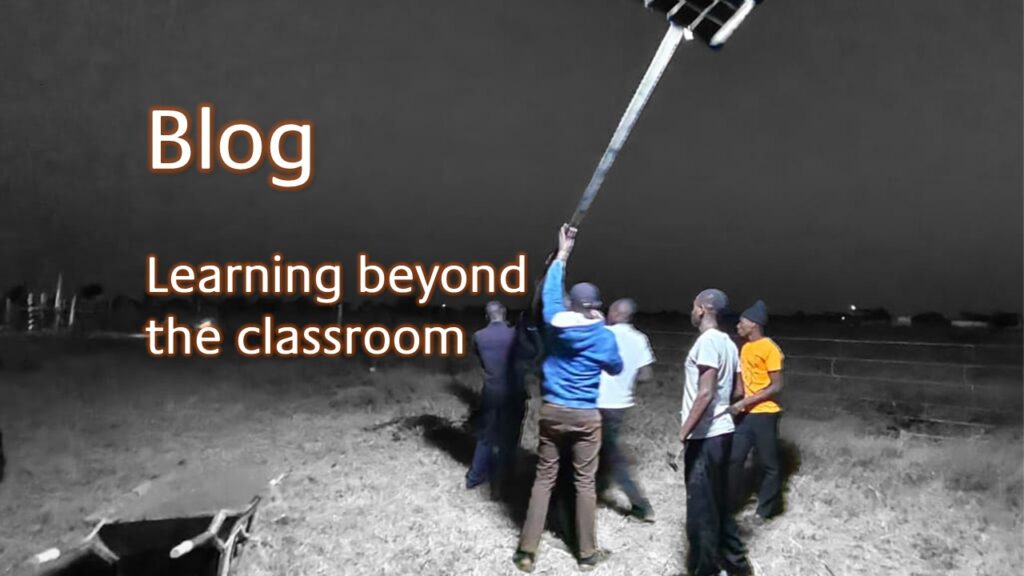
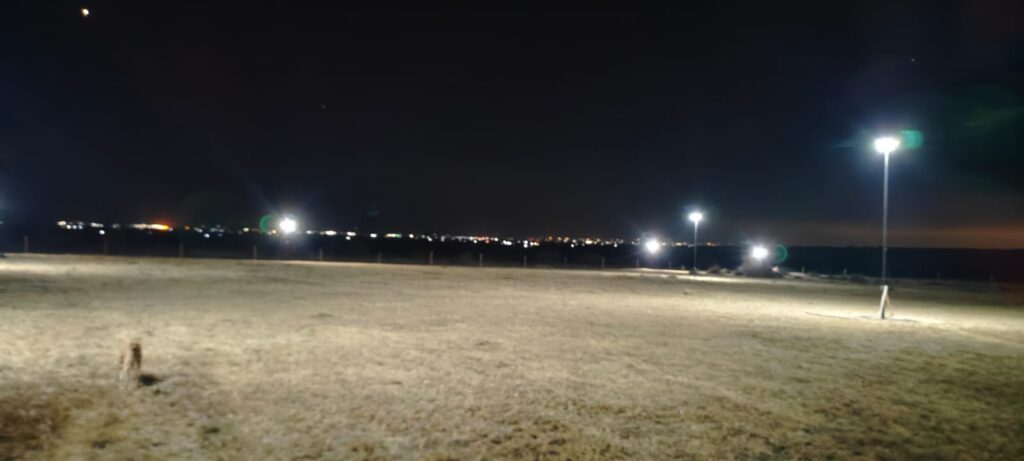
The engineers are needed for the technical work. The welders are needed for the welding. The electricians are needed for the electrical work. But the real building happens when, together as a team, we take responsibility and do what we can with our own hands. For instance, this week we needed to fix the solar powered lights around the resort area. The welders and technicians came and fixed the lights to the posts. Through the mentorship groups, the 14 lights were then distributed among the four groups. With their mentors, the groups were responsible for digging the holes and hoisting the lights.
And why not? It is not rocket science.
Today, the welder fixes it and we watch. Tomorrow, who knows? We might be doing our own welding. We might be fixing the solar lights. We might be figuring out why something is not working instead of simply waiting for someone else to come and fix it.
How cool can it be to have a chef who understands welding? Or a hotel manager who knows how to fix a solar light?
I am not saying we are training welders, electricians or technicians. But if a young person can learn to understand how things work, ask questions, try something new and solve a problem, then we have given them something much bigger than a technical skill.
We have given them resourcefulness. And as dusk came and the lights started lighting up one by one, all I could hear from the trainees was:
“Wow! Wow! This looks beautiful!” Many were taking photos and sharing them in the group with captions like:“Don’t ask where this is. This is our work.”
That made me happy.
Then I asked Jonnes: “How beautiful can it be that in five or six years, when you become the General Manager of this resort, because it will be managed by you guys, you will be telling your fellow staff, ‘You see these trees here? We planted them during our training. You see this light here? I hoisted it with my group members.’”
With a smile, still staring at the lights, he said: “And that dream is coming soon.”
How beautiful can training be? And as if this was not enough, on Sunday we had some engineers fixing the water tower. The welders and contractors could not lift the steel bars by themselves. Then the trainees, on their own, could not leave the site.
Though not as muscular as the contractors, both the young ladies and gentlemen helped raise the pillars.
No crane.
No machine.
Just one common goal:
Building together.
Construction continued for two more days during the week. After every lesson and during breaks, I could see them going to the site in turns, either to help or to ask questions.
Like watch dogs!
It is as if they are telling the people constructing:
“This is our project. I am vigilant. I must know what you are doing.”
And I think this is another part of the learning that we sometimes underestimate.
They are not just watching construction.
They are learning how things are put together.
They are learning how to ask questions.
They are learning how to work with technicians, engineers and contractors.
They are learning that they do not have to know everything before they can participate.
And perhaps one day, when something breaks in the hotel, the chef will not simply say, “That is not my job.”
Maybe she will pick up a tool and say, let me see what the problem is.”
Over the weekend, armed with rakes, wheelbarrows, machetes and every tool they could find, they all headed to the grounds to clear the cut grass, level the ground and remove stumps, making the place ready for the event.
When I look at their faces, they don’t look like young people who have been commanded to do manual work. They look like young people who are happy that they have been given a chance to show what they can do.
Young people who are happy to be part of a bigger dream.
Young people who are learning by doing.
Perhaps the best lessons happen beyond the classroom.
In two weeks, on 28th August, the big day will come.
The event will host about 300 guests. For one night, our accommodation tents will become home to 30 guests.
And honestly, I have no doubt about these trainees.
They are taking control, from planning to execution.
They are planning the event. They are preparing the grounds. They are working with the technicians. They are putting up lights. They are helping with construction. They are figuring things out. They are taking ownership. And I can sit down and relax because they have proven that they love what they do.
And I am convinced this is a better examination than sitting for three hours, filling in an answer sheet.
Because here, the question is not: “What do you know?”
The question is: “What can you do with what you know?”
And perhaps even more importantly: when you don’t know………you learn.”
More information about Mary’s work can be read on www.twajali.org
More details about the kanthari course can be found on www.kanthari.org/admissions