By six in the evening, my mother should have been resting.
She had already spent the day standing in front of children, repeating instructions, marking books and raising her voice above the noise of a classroom. But at home in Kagadi, her working day was not over.
I remember our small table. Exercise books would be spread across it, children from the neighborhood sitting around her, waiting for another mathematics problem to be explained or another word to be corrected. And somewhere around that same table were her own six children. I was one of them.
My mother was a conventional teacher. She taught much the same way teachers around her had been trained to teach; stand in front, explain, write on the blackboard, let the children copy and prepare them for examinations. But after school she also coached children who lived nearby to earn some extra money.
Sometimes her salary was paid late. Even when it came, it was too small for everything waiting for it; Food did not wait. School fees did not wait. Six children certainly did not wait.
My father was largely absent from our everyday life. As a child, I did not understand why. I only understood what I could see: my mother carrying responsibilities that should have belonged to two people.
Kagadi, in Western Uganda, was the world I knew. On dry days, dust followed vehicles along the roads and settled on shoes and clothes. In many homes, the evening smell of cooking fires meant supper was being prepared. At school, there was the sound of children repeating answers together, wooden desks scraping against the floor and chalk moving across blackboards.
We were far from the Uganda I would later experience in Kampala. The western part of the country also lives close to another reality. Beyond Lake Albert lies the Democratic Republic of Congo, where conflict has displaced families for years. News of fighting across the region does not always feel like news from another world. In this part of Uganda, you grow up knowing that geography can decide many things about your life before you are old enough to understand them.
What if the place where you are born also decides the kind of education you get?
I simply knew that I did not want to become a teacher. Teaching looked exhausting. I had seen enough of it at home. And school itself was not doing much to convince me otherwise. I remember classrooms packed with learners. Sometimes there could be around ninety children sharing one room. We squeezed ourselves onto desks while the teacher stood at the front. The rhythm was familiar. The teacher spoke. We listened.
The teacher wrote. We copied.
Then came the examination. At times, education felt like a competition in remembering who had copied the teacher most accurately.
Results made the competition even more visible. The best performing learners could be celebrated publicly. Everyone knew who was first, second and third. The weakest performers could also be pointed out and more often beaten with a cane in front of their peers. Imagine being a child standing there while everyone knows you are among the last.
What does that teach you? Does it tell you to work harder?
Or does it slowly convince you that perhaps school was never meant for you?
For years, I looked at education mainly through the eyes of the learner.
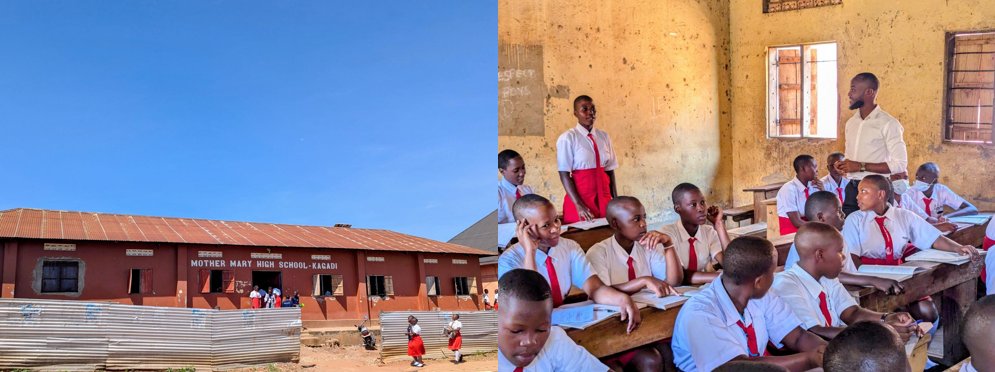
Then life played a joke on me. I actually became a teacher.
The first time I stood in front of a class full of children; many things I had judged as a learner began looking different.
Ninety learners no longer looked like ninety children sitting at desks. They became ninety different minds. This observation was confirmed during my leadership training in kanthari, I realized that each one of these 90 students had even a different style of learning.
There are learners who learn best through hearing and repeating, some through seeing pictures and patterns, others through writing and reading and again others prefer learning through movement and enacting. And of course, many are learning with a mix of these methods.
Now, I start to question something about teaching. If I have explained something, but the learner has not understood it, have I really taught?
A sentence I once came across often attributed to Ignacio Estrada while reading began to make much more sense to me: “If I can’t learn the way you teach, then teach me the way I learn.” It sounded simple, but standing in front of a real classroom made it complicated.
How will teachers reach each learner? How can we influence learners when there are ninety of them? How do we reach the quiet child, the fast learner, the one who needs to see something, the one who needs to try it, and the one who needs to hear it explained differently?
Back then, I already began to understand education differently. Education is not what I have managed to teach. It is what the learner has actually managed to understand.
And that understanding became even more personal when I met Sarah. Sarah was sixteen, a Senior Five learner in a rural school where I was teaching. One day, I asked her a simple question: “When do you understand a lesson best?”
She became quiet for a moment before answering. “When the teacher explains slowly and gives examples, I understand… but not all the time.”
I kept thinking about those last four words. “Not all the time.”
Here was a learner sitting in school every day, attending lessons, copying notes, preparing for examinations and still sometimes leaving the classroom without understanding.
So, I started changing small things in my own lessons. Not buying expensive equipment.
Just changing what happened between the teacher and the learner. During one Economics lesson, instead of beginning with notes, I asked learners to imagine their mother had only 20,000 shillings at Kagadi market but needed food, soap and transport home and then decide in groups what she should buy first and what she should leave out.
At first there was silence. They were waiting for me to give the answer. I refused.
“Talk to each other.” Desks moved. Someone laughed. One learner disagreed with another. Another started explaining using an example I had not thought of myself. Soon the room became noisy not the noise of disorder but the noise of people thinking together.
Then hands started going up. Even some of the learners I hardly heard from were speaking.
At the end, one learner looked at me and asked: “Teacher Ian, will all the remaining lessons be like this?” That question followed me home. What exactly had happened?
I had not suddenly become a genius teacher. The learners had not suddenly become more intelligent. I had simply stopped treating them as containers to be filled. And that disturbed me. If one small change could make a learner who had been silent suddenly want to participate, how much potential were we losing in ordinary classrooms? I also began looking differently at teachers.
Today, when I think about that small table where my mother coached children after a full day of teaching, I see more than struggle. I see the beginning of my own story. She spent her life trying to create opportunities for children with whatever she had. I am trying to continue the same work. Only this time, I want to start with the Teacher.
One afternoon at a school where I teach in Kagadi District, I watched a teacher erase a learner’s low mark and replace it with a higher one. The learner had not understood more; only the number improved. The act was wrong, but it revealed a system in which hiding a learning gap can feel safer than admitting one the teacher lacks support to address.
Uganda’s Competency Based Curriculum expects learners to investigate, collaborate, solve problems and apply knowledge in real situations. Yet many rural teachers are expected to create these experiences under conditions that favour traditional chalk-and-talk teaching: overcrowded classrooms with limited preparation, scarce materials, weak connectivity, confusing assessment demands and little continuing professional support.
Before its rollout, only 35% of serving teachers were trained directly by the National Curriculum Development Centre; they were expected to orient the remaining 65% through a cascade model that often-lost depth. The 2025 Baseline Education Census reported a pupil teacher ratio of 48:1 in public primary schools, while some classrooms I have observed contain 60-90 learners. Only about 23% of surveyed primary schools had internet access (EPRC, 2024; UBOS & MoES, 2026; Uwezo Uganda, 2025).
In these conditions, group work can become noise, quiet learners can disappear and children with learning disabilities may be labelled slow or careless. Teachers may complete the syllabus and record marks without ensuring that every child has learned.
Government training, online courses and curriculum guidance are important responses, but many serving rural teachers still lack regular, nearby and subject specific support. They need opportunities to practice lessons, receive feedback, use available local resources, integrate technology, manage large classes and adapt teaching for different learning needs. Until this gap is closed, Uganda’s curriculum ambitions will continue to move faster than the rural classrooms expected to realize them.
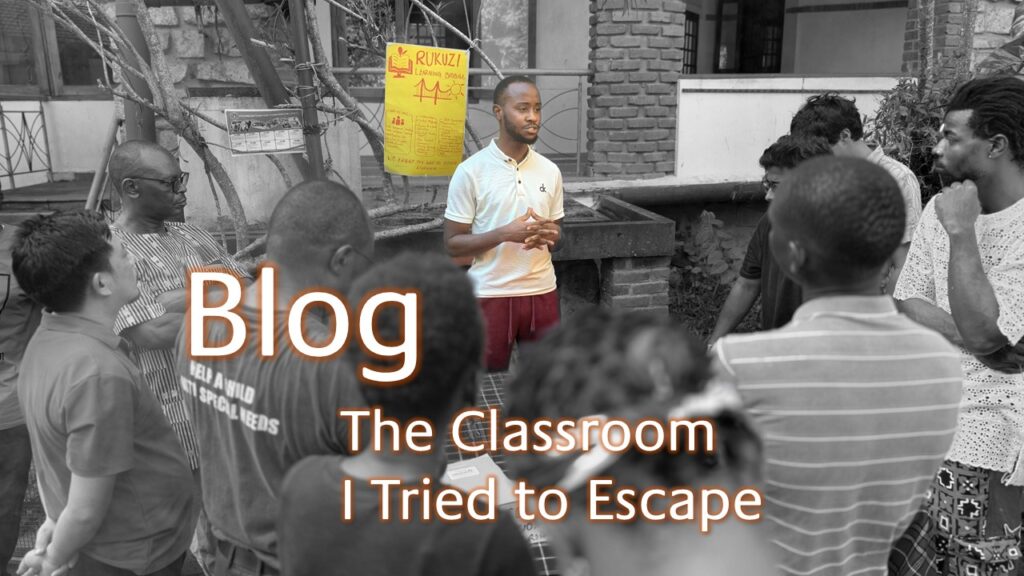
An eleven-year-old child stands before a room of teachers and asks them to build a bridge from sticks, thread and paper. As they work, one teacher dominates, another stays silent and a group hesitates after its bridge collapses. The child asks, “How do you feel? Who was left out? What would have helped you learn?” For a moment, teachers experience the learner’s seat. This is where Rukuzi Learning Bridge begins.
Rukuzi means “to uplift.” Through a three-week practical programme, it supports rural and semi-rural teachers to create classrooms where learners question, investigate, participate and apply knowledge. Head teachers and principals join selected sessions to support classroom application. Teachers examine learning from both teacher and learner perspectives. They experience different learning methods, explore learning disabilities, age-appropriate sex education and learn to facilitate sensitive discussions safely.
They then discover how local objects, stories, community knowledge, printed materials and technology can support storytelling, inquiry, experiments, role play and group discussion.
Before the programme begins, each participant submits a topic they genuinely wish to understand. A colleague draws it from the Curiosity Box, investigates it and transforms it into a two-hour interactive workshop for the final week. The workshop brings together appropriate methods, available resources, inclusive participation and checks for understanding.
Rukuzi continues through peer support, classroom observation and resource sharing. The result is a teacher who feels supported, teaches with greater confidence and creates meaningful learning experiences even in large, under-resourced classrooms. Rukuzi uplifts the teacher so that the teacher can uplift generations of learners.
Learn more about kanthari at: www.kanthari.org
And, SPREAD THE SPICE is coming up on 17th and 18th October 2026.