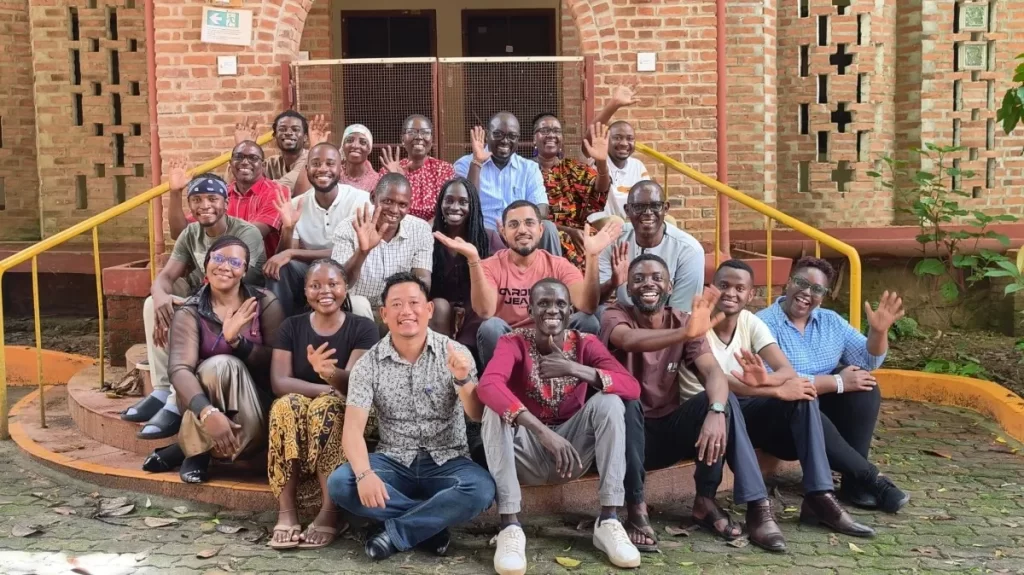
Slowly, the campus is filling with life again. Sitting on the roof terrace, from where I can hear everyone, but no one can see me, I listen to laughter, excited greetings, and the familiar sounds of new beginnings. I keep waiting for the dogs to growl at the “new intruders”, but surprisingly, all three are quiet. Maybe they understand that we are starting again with a new batch of change makers.
Since all the catalysts are guiding specific participants through the journey in 5 acts, it is important to clarify where we start and where we are heading towards.
Most of our participants come here because they have personally experienced a problem, sometimes even existential danger. They arrive with an idea they believe is the solution to the painful experiences they have lived through.
And this is exactly where the challenge begins.
Last week, during one session of the preparatory course in which we spoke about their stakeholders, we asked a simple question:
“What is the problem you want to solve?”
Almost all of them answered with some version of:
“My objective is to…”
It quickly became clear that understanding the difference between a problem and a solution is not easy.
Having goals and objectives is wonderful. But before anything else, we must understand the actual problem.
Going forward, every tool we introduce, every question we ask, and every step we take needs to be built on the foundation of the problem they want to solve. All we ask the participants is to begin with is a simple problem statement, one or two sentences that clearly explain where the problem exists, what the problem is, why it matters, and who is affected.
Once the problem becomes clear, we begin to define:
– Who are the people most affected by this problem, and who would benefit from a possible solution? What are their needs? What are their stories?
– Who are the people with the power to create change? Who needs to be convinced, influenced, or mobilized?
And finally:
– who are the partners they want to work with? What kind of team do they need around them?
Only when these questions become clearer can we slowly begin to approach possible solutions. And even that will only happen about six weeks into Act 1.
But even then, we move step by step.
First, participants learn to zoom out. They begin to shape a broad vision, the change they wish to see in the world, and from there, a mission: the larger strategy that could eventually lead toward that vision.
And then, the famous ‘kanthari washing machine’ begins its cycle.
Through a deceptively simple game, participants discover that the ideas they were once deeply attached to are often rather conventional, predictable, and sometimes even ‘boring’ responses to a now much more deeply understood problem.
Finding the right solution does not happen in a single moment of inspiration. It is usually a slow, sometimes painful, but steady journey toward identifying the right intervention.
We call this process “concept transformation.”
And concept transformation begins with critical questions, questions that all of us need to help gather and sharpen throughout these first six weeks.
So, whenever we hear participants rushing toward solutions, we gently guide them back to the foundation: the problem that truly needs to be solved, and the people who would genuinely benefit from their interventions.
We try to help the participants understand that there is little value in jumping too quickly to conclusions. We give them the space and time to discover the deeper reasons why they chose to be at kanthari.
The week has already started with a lot of positive energy and vibes,
Greeting you from the roof,
sabriye
Read more kanthari blog posts on: https://www.kanthari.org/coronablog/