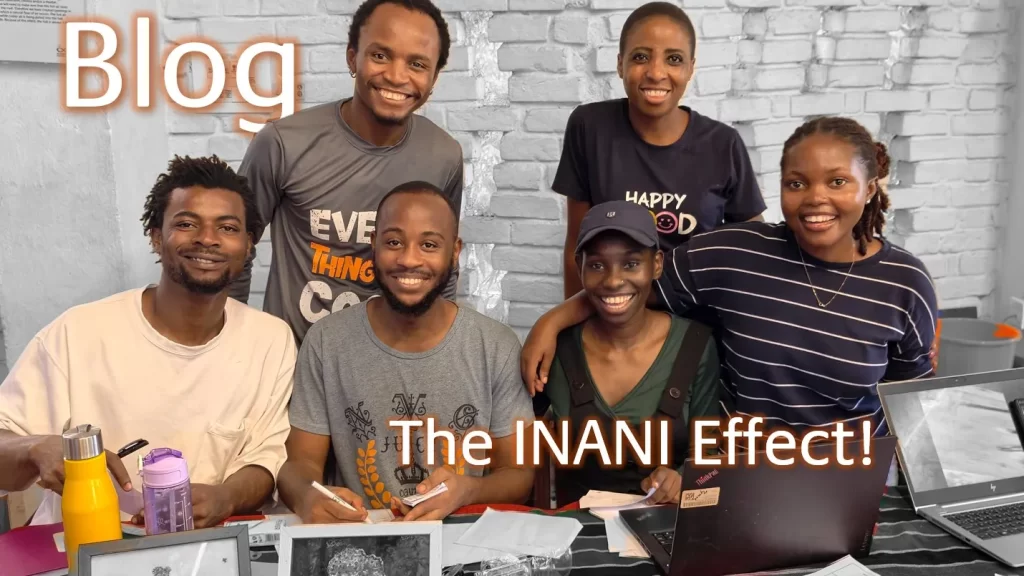
Who would have thought that kanthari change-makers could turn problems into products within only one week? It all started during the COVID years when we designed the INANI program. Inani is a Zulu word meaning “value.” It is also an acronym standing for Independent, Natural, Alternative, Nutritious, and Inventive. The idea emerged from a global experience we all shared during the pandemic: suddenly, something was missing. What was missing, however, depended very much on where you lived.
While many people around the world struggled with access to food, drinking water, or medical support, I had to explain to my Indian colleagues, with a certain amount of embarrassed blush, that Germans were ‘suffering’ from a shortage of toilet paper. 😉
But back to INANI.
The goal was simple: observe a problem, identify a need, and in a very short time transform that observation into a product that could become part of a solution.
Back in 2020, when our campus was closed, we developed the Hyacinth Diaper, the only diaper that, after use, increased in value! How that works can be read in the blog post of back then: https://www.kanthari.org/corona-blog-04-09-2020/
The participants of 2021 came up with fascinating products: plastic made from tapioca, spicy dried snacks from overripe fruits (not the biggest success, as they still tasted slightly off, even after drying), and a mobile chicken coop that could have been revolutionary if it hadn’t fallen apart every time it was moved. Some products, however, stood the test of time. The banana-fiber coasters produced that year are still faithfully serving our office today.
The following year, one group created dog food from leftover biryani chicken bones and feathers, while another group produced paint from lake mud. Unfortunately, they never managed to expand their color palette beyond brown, brown, and brown. 😊
All these products were originally developed over three months.
This year, participants had only one week.
How? Well, time is relative.
I learned that at university. Whenever we had months to write a paper, we spent months doing absolutely nothing. Then, one week before the deadline, panic would set in.
The first three days were usually manageable. With enough coffee, we could transform mediocre thoughts into something resembling academic work.
Then disaster struck.
The computer crashed.
The printer toner ran out.
The paper was finished.
The shops were closed.
Another sleepless night followed, involving a desperate journey across the city in search of paper and toner, only to submit the assignment ten minutes before the deadline.
Yet somehow, when we only had two weeks from the beginning, everything felt different. We worked immediately. We ate. We slept. We remained surprisingly fresh.
So, for this year’s INANI Fair, we were not primarily looking for perfection.
We wanted speed and sellable items despite enormous time pressure.
What problem do I have?
What problem do my peers have?
What problems or challenges exist on campus?
Can I transform that problem into a product?
And who would buy it?
To simulate a marketplace, we added another layer to the game. We injected the equivalent of 300 Euros into the system. Every participant received 1,000 Rupees in coded cheque books. Every staff member received 550 Rupees, which could be topped with personal funds if desired. I knew some participants had not slept the previous night. Again, I was reminded of my university days.
But the outcome was astonishing.
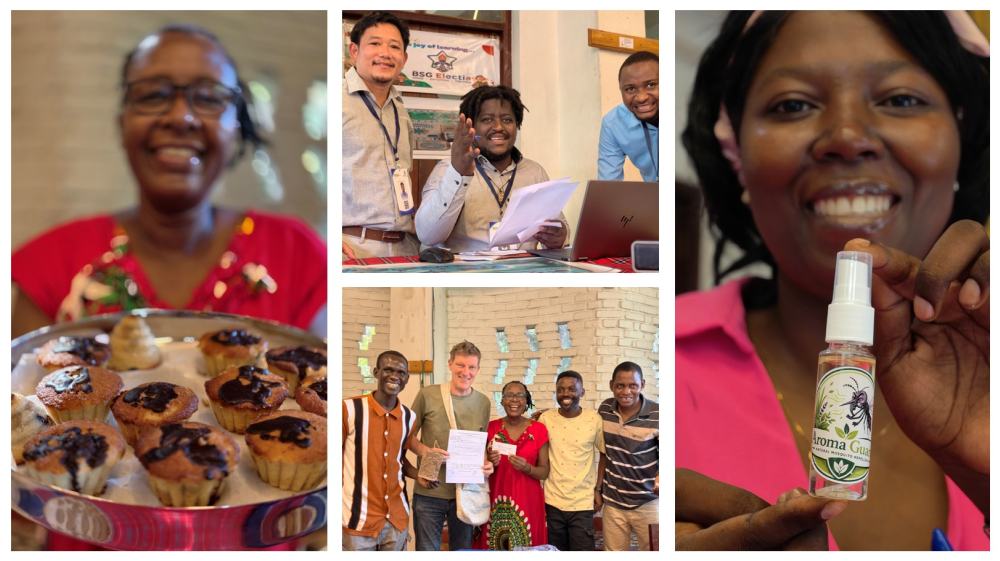
The auditorium had magically transformed into a bustling fairground. Colorful cloth decorated carefully designed stalls displaying a wide range of products.
There was jewelry made from recycled paper and plastic.
Paper made from water hyacinth.
CashewPan, snacks made from grounded cashews, inspired by one group member who is a Kenyan cashew farmer.
Several games in which products could be won.
Organic mosquito repellent with pleasant fragrances.
And much more.
One group developed an online game designed to teach children political awareness and critical thinking. They couldn’t really sell a finished product, but they made profit charging a small fee for demonstrations and encouraged several to invest in their ideas.
Perhaps the most impressive feature of the entire fair was the work of the organizers: Ravi, Rohin, and Surji.
They connected all stalls through a visible digital graphic system that, in real time showed which stall sold the most products, who purchased the most items, and which products were becoming market favorites.
At times it felt like standing on a stock exchange floor or at an auction.
Tyrone, acting as master of ceremonies, regularly announced the latest standings, adding even more excitement to the atmosphere.
Since every cheque was customer coded, we could analyze trends. How many women between 30 and 40 bought mosquito repellent? Who preferred educational games? Who kept returning to the cup game stall? And all this against a backdrop of relaxed jazz music.
The adrenaline, the energy, the enthusiasm, it all felt surprisingly real.
What felt different, however, was the absence of fierce competition. All participants applauded for the stall with most sold items.
But of course, everyone had the same purchasing power and due to the code on the cheque book, it was not possible to buy their own products.
We expected participants to try to find loop wholes to get funding by cross donating, bargain aggressively, or trying to outsmart one another by overspending.
They didn’t. They stayed truthful and fair.
And the fair felt more like a celebration of creativity than a competition.
In just one week, problems didn’t just become products, they became proof of what’s possible when purpose meets pressure.
Read more blog posts here
learn more about kanthari TALKS on https://kantharitalks.org/